Pe vs pvc christmas tree
PE vs PVC Christmas Trees: What the Needles Are Made Of
The essentials
PE tips are molded to copy a real needle; PVC tips are cut from flat film and add volume for less. Of the 51 trees we compared, 35 write PVC alone, so a page that names PE, and says how much of it, is the exception that deserves a closer look.
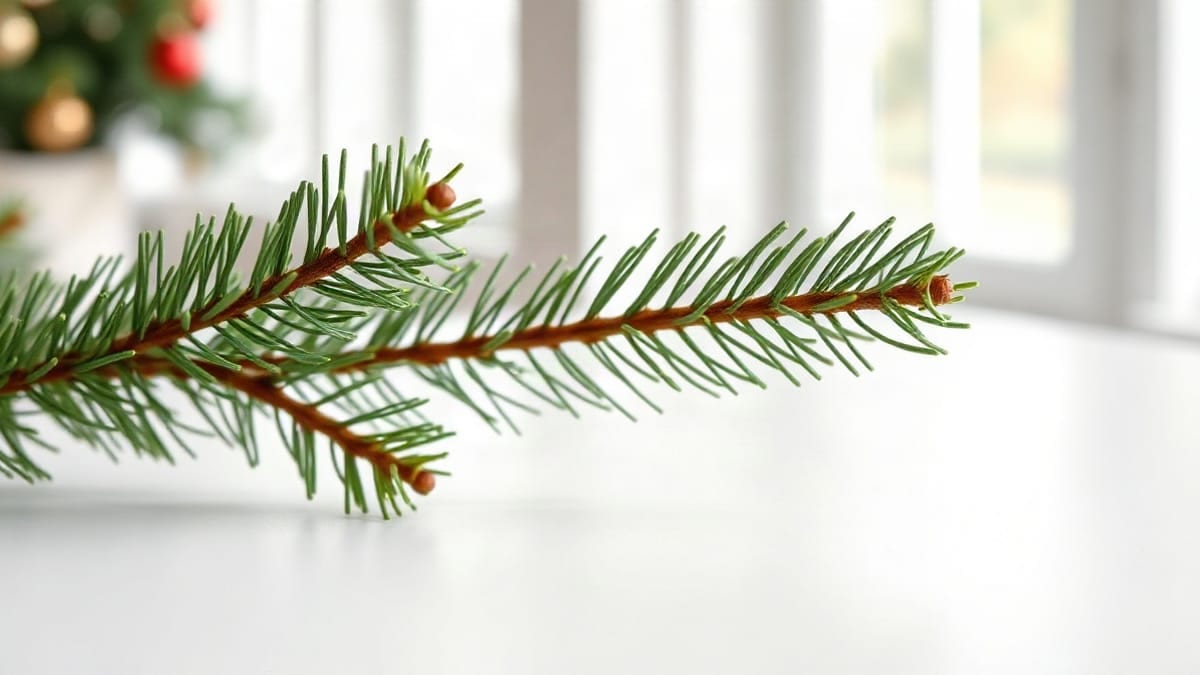
Two trees can stand the same height, carry the same bulbs and still look nothing alike once you step close, and the reason is usually the plastic in the needles. A fake Christmas tree is built from PE tips, which are molded, or PVC tips, which are cut from flat film, and most good ones mix the two. A listing that writes "PE" makes a claim you can check; one that writes nothing leaves you guessing. In this PE vs PVC Christmas tree guide we explain what each material is and how to spot it, and we set out what 51 listings we read on November 14, 2026 actually say, and what the law and the research do not say.
Contents9 sections
- 01PE or PVC: which one is better for a fake Christmas tree?
- 02What PE and PVC mean on a fake Christmas tree
- 03How to tell PE from PVC in a listing and on the branch
- 04What 51 listings write about PE and PVC
- 05The 13 trees whose listings write PE
- 06Lead, fire and the plastic: what the sources say
- 07Environment and lifespan: what nobody has measured
- 08Questions about PE and PVC Christmas trees
- 09Sources
PE or PVC: which one is better for a fake Christmas tree?
The essentials
PE looks more like a real needle, up close. PVC is the cheaper, flexible filler that makes a tree full. The best-looking fake Christmas tree uses both: PE on the outer tips you see, PVC inside for volume.
PE is polyethylene, a plastic that can be molded into a shape. PVC is polyvinyl chloride, a plastic that is sold as thin flat film and cut into strips. Those two facts explain almost everything else. A molded tip can copy the fork and the texture of a real branch, so it holds a shape and shows detail from a few feet away. A film tip is flat, so it is fringed and curled to look like needles, which works from across a room and less well at arm's length. A cut-film tip also bends easily, which makes it good at filling gaps.
We have not set up any tree on this page. What follows comes from the makers' own listings on Amazon.com, from public agencies and from the arithmetic we run on both, never from handling a tree.
| PE (polyethylene) | PVC (polyvinyl chloride) | PE and PVC mix | |
|---|---|---|---|
| How the tip is made | Molded in a shape | Cut from flat film | Molded outer tips, film inner tips |
| Look from a few feet | Texture and fork of a real branch | Flat fringe, even from tip to tip | Detail outside, fullness inside |
| Where it sits on the tree | Outer branch tips | Inner branches and filler | Both, in a share the maker chooses |
| What a listing writes | "PE", "polyethylene", "molded", a brand name | "PVC", "polyvinyl chloride" | "PE and PVC", "mixed" |
| How many of our 51 listings write it | 13 (all of them mixed with PVC) | 35 with no PE at all | Same 13 |
Which is better, PVC or PE?
PE is better for realism and PVC is better for volume, so the better tree is the one that uses each where it belongs. If a tree stands where people pass within an arm's length, such as a hallway or a table, PE tips are what show. If it stands in a corner and is seen from across the room, a PVC tree with a high tip count can look just as full. In a PE vs PVC Christmas tree choice, the answer depends on distance, not on a winner.
The practical answer, then, is not to choose between the two plastics but to ask how the two are split. On the 51 listings we read, no tree is sold as PE alone. All 13 that write PE also write PVC, which matches the way makers describe it: Hykolity writes PE for the outer detail and PVC for "interior volume", and Best Choice Products writes that its branches "combine premium-quality PE & PVC".
What is the best material for realistic Christmas trees?
PE, or a mix with PE on the outside. The listing for the Balsam Hill BH Fraser Fir says its needles are molded from natural Fraser fir branches in 40 tip variations, and its material line writes polyethylene and polyvinyl chloride. That is the most detailed realism claim in our group. It is still a claim: nothing on a listing measures how a tree looks.
A material line is a necessary clue to realism, not proof. A tree can write PE and still look flat if its tips are few, and a PVC tree with a high tip count can read as full from a distance. Read the material together with the count of tips per foot, which our guide to the best artificial Christmas trees works out for each model.
What PE and PVC mean on a fake Christmas tree
What does PE mean in Christmas tree?
PE means polyethylene, the plastic used for molded needles. On a listing the letters appear in three ways: "PE" on its own, "polyethylene" in the material line, and brand names such as "Feel Real" or "True Needle" for molded foliage. Eleven of the 13 listings that write PE put polyethylene in the technical material line. The other two, the Best Choice Products 9 ft Full Aspen and the National Tree Company 3 ft Nordic Spruce, write it only in the bullet points, while their technical sheet says PVC alone.
Makers describe molded tips as the ones that hold a branch shape and show separate needle clusters. That is the claim behind every "PE" on a listing, and it is a claim about looks, not a measured property.
What is a PVC Christmas tree?
A PVC Christmas tree is one whose needles are cut from flat PVC film and wired onto branches. It is the most common kind in our sample: 35 of 51 listings write PVC with no PE at all, and 48 write PVC somewhere. That includes every Best Choice Products tree that does not use the Aspen branches, the National Tree Company Kingswood Fir and Dunhill Fir, and the Yaheetech, SHareconn and YITAHOME trees.
PVC film is the material makers most often name when they write flame wording. Twenty-nine of the 51 listings write some, and "flame-retardant PVC branches" is the line Best Choice Products and SHareconn use. A PVC tree is not a poor tree. It is one whose realism comes from the number of tips and the way the branches are fluffed.
What are artificial Christmas trees made of?
Three parts: foliage (PE tips, PVC tips or both), a metal frame and trunk, and wiring. On a pre-lit tree the wire that carries the bulbs is coated in plastic, and the California agency named below says that coating is PVC on some lights. The metal is steel or iron, written in the listing as "metal hinges" and "metal stand". The foliage is the only part that changes between PE and PVC, and it is the part this page covers.
The one study of these trees' environmental cost gives the same picture of the plastic side. It models a 6.5 ft artificial tree weighing 4.93 kg with the stand, with a trunk that is mostly PVC and branches of polypropylene on steel. It names polyvinyl chloride as the biggest contributor to the tree's impact, followed by steel sheet. Its model tree is not a PE tree, a point we come back to below.
What does a PE and PVC mix mean on a Christmas tree?
It means the tree has both kinds of tip, usually with PE on the outer ends of the branches and PVC filling the inside. That is the standard build for a mid-range or premium fake Christmas tree, and 13 of our 51 listings write it. A mix is not a halfway tree. It is a design choice, and the share of each plastic decides what you see.
The share is the problem: only one listing writes it. The Hykolity 9 ft Multicolor writes 7,430 PE tips and 2,162 PVC tips. Add them for 9,592 tips, divide 7,430 by 9,592, and the PE share is 77 percent. The other 12 write "mixed" and nothing more. A listing that gives a tip count but no split gives you half of the sum.
How to tell PE from PVC in a listing and on the branch
The essentials
Read the technical material line first, then the bullets. If they disagree, believe the more specific one and ask the seller. A listing that writes only "Plastic" or nothing tells you nothing.
A listing offers two places to read the foliage: the bullet points, which are written to sell, and the technical sheet, which is a field the seller fills in. They do not always agree. Puleo International's two Aspen Fir trees call their tips "molded PVC" in the bullets, yet their material line lists polyethylene and polyvinyl chloride. The Best Choice Products 9 ft Full Aspen says "PE & PVC" in the bullets and "Polyvinyl Chloride" on the sheet. The National Tree Company 3 ft Nordic Spruce does the same, with "Feel Real PE and PVC" against PVC alone.
| What the listing writes | What you can conclude | Where it appears |
|---|---|---|
| "PVC needles", "PVC branch tips" | Flat film tips, no PE claimed | Bullets and material line |
| "Polyethylene, Polyvinyl Chloride" in the material line | Both plastics, share unknown | Technical sheet |
| "Mixed PE and PVC tips" | A mix, share unknown | Bullets and item highlight |
| "Feel Real", "True Needle" | A brand name for molded foliage; ask what it is made of | Bullets |
| "Molded PVC" | Shaped PVC, which conflicts with a PE claim on the same page | Bullets |
| "Plastic", or no material line | No information about the foliage | Technical sheet |
| "HC-PVC" | A term the listing does not define | Bullets and item highlight |
How can you tell PE from PVC by looking at the branch?
Look at the end of the branch and press on it. A PE tip, as makers describe it, is a molded piece with separate needle clusters that holds its shape when you bend it. A PVC tip is a fringe of parallel strips cut from film, with a flatter look and a more uniform color. These are the makers' descriptions, not our observations, because we have not handled any of these trees.
You cannot tell the split by looking. A tree can have PE tips on every outer fork and still be mostly PVC by count, because inner branches use far more tips. So use the eyes for the look and the listing for the number.
How much PE should a fake Christmas tree have?
There is no official figure, and the maker's own number is the only one to use. The only split written among our 51 listings is 77 percent PE, on a 9 ft tree whose 9,592 tips would be 1,066 tips per foot, far above the 575 per foot of the next highest claim. Treat a claim that large with care until the seller gives a count you can check against the listing's other lines.
A simple rule works for any tree. Divide the PE tips by the total tips, and compare trees of the same height. If the seller writes no split, assume PE covers the outer tips only. For a tree that sits close to people, look for a PE claim and a tip count on the same page; for one in a corner, the count matters more than the material. The same reasoning appears on our 7.5 ft pre-lit page.
What 51 listings write about PE and PVC
On November 14, 2026 we read the Amazon.com product pages of 51 artificial trees from about a dozen brands. We counted the material wording on each page, in the bullets, the title and the technical sheet. Eleven pages write polyethylene in the material line, two write PE only in the bullets or title, 35 write PVC with no PE, and three write neither.
| What the page writes | Number of listings |
|---|---|
| PE in the technical material line (always with PVC) | 11 |
| PE only in the bullets or the title | 2 |
| PVC and no PE anywhere | 35 |
| Neither: "Plastic", "Metal, Plastic" or no material | 3 |
| Total read | 51 |
Two facts stand out in this PE vs PVC Christmas tree count. First, no listing is PVC-free: every tree that writes a plastic writes PVC, and the 13 that add PE are blends. Second, no listing writes lead, phthalates, Proposition 65 or any laboratory result on its foliage. The only reassurance in the whole sample comes from two SHareconn pages, which describe their PVC as "environment-friendly" and "harmless to human body". No test, standard or laboratory is named, so it is a sentence, not a result.
The 13 trees whose listings write PE
These are the trees on this site whose listings write PE or polyethylene, ordered from the most detailed claim to the least. The last column links to the page where each is ranked on its own numbers. No price appears here, by design.
| Tree | What the listing writes about the foliage | PE share written | Tips written | Where we rank it |
|---|---|---|---|---|
| Hykolity 9 ft Multicolor | "7430 PE tips with 2162 PVC tips", PE for outer detail | 77 percent, our arithmetic | 9,592 | 9 ft pre-lit trees |
| Balsam Hill BH Fraser Fir 7.5 ft | Foliage "molded from natural Fraser fir branches", 40 tip variations | Not written | 3,272 | 7.5 ft pre-lit trees |
| ClouFairy 4 ft Blue Spruce Pencil | "PE & PVC mixed branch tips" | Not written | 566 | 4 ft pre-lit trees |
| Glitzhome 7.5 ft Flocked Pencil | "Mixed PE and PVC tips" | Not written | 1,211 | best artificial trees |
| Hykolity 9 ft PE Foliage | "Lifelike PE branches and dense PVC foliage" | Not written | 5,179 in the bullets, 1,854 on the sheet | 9 ft pre-lit trees |
| Hykolity 9 ft Flocked PE | "Lifelike PE branches and dense PVC foliage" | Not written | 5,179 in the bullets | 9 ft pre-lit trees |
| Hykolity 7.5 ft PE Foliage | "Lifelike PE branches and dense PVC foliage" | Not written | 3,325 | 7.5 ft pre-lit trees |
| Best Choice Products 9 ft Full Aspen | "Premium PE & PVC" in the bullets, PVC alone on the sheet | Not written | 3,880 | 9 ft pre-lit trees |
| Best Choice Products 9 ft Slim Aspen | "Premium-quality PE & PVC" | Not written | 3,088 | 9 ft pre-lit trees |
| Puleo International 7.5 ft Aspen Fir | "Molded PVC" in the bullets, PE and PVC on the sheet | Not written | 1,319 | 7.5 ft pre-lit trees |
| Puleo International 4.5 ft Aspen Fir | "Molded PVC" in the bullets, PE and PVC on the sheet | Not written | 411 | 4 ft pre-lit trees |
| National Tree Company 3 ft Nordic Spruce | "Feel Real PE and PVC" in the bullets, PVC alone on the sheet | Not written | 363 | 4 ft pre-lit trees |
| GarveeLife 7.5 ft Dual-Color | "HC-PVC mixed branches", PE and PVC on the sheet | Not written | Not written | 7.5 ft pre-lit trees |
The table shows a pattern. Of the 13, only one gives a split, and four disagree with themselves between bullets and technical sheet. When two listings of similar height write the same words, the one with a share and a tip count is the one you can check. For the pages built around this question alone, see the page on 100 percent PE artificial trees, and for a snow-coated version the flocked trees page, where the coat hides part of the PE detail.
Lead, fire and the plastic: what the sources say
The essentials
No agency source we read says PE foliage is safer than PVC foliage, or the reverse. The one official PVC warning is about the coating on light wires, which every pre-lit tree has whatever its needles are made of.
Safety is where people hope for a simple PE vs PVC Christmas tree answer, and the public record does not supply one. We read the agencies' pages on November 14, 2026. They address lights, electrical faults and flame resistance. None of them compares PE with PVC needles, so a claim that one is safer than the other, whoever makes it, is not backed by a source we can show you.
Are PVC Christmas trees safe?
The sources we read do not say a PVC tree is unsafe, and they do not certify one as safe either. The California Office of Environmental Health Hazard Assessment, which runs Proposition 65, says in its holiday lights fact sheet of November 2018 that some holiday lights with PVC coating on wires, cables and cords can expose you to lead and phthalates. That is the wire. The agency has published no sheet of its own on the trees, as far as our search went.
The agency's advice is practical: wash your hands, and your children's, after hanging or taking down lights; keep young children from handling them or putting them in their mouths; and choose lights labeled "lead-free" when you can. We report that and do not go beyond it, because the agency does not give a level for foliage. Among our 51 listings, none writes "lead-free", and none mentions Proposition 65.
What does Prop 65 say about lead in a tree's PVC?
Proposition 65 is a California warning law, not a ban. A product sold in the state that can expose people to a listed chemical, lead and phthalates among them, has to carry a warning unless exposure is below a set level. A Prop 65 warning on a tree therefore means the maker did not show it is below that level, and it does not say the tree is dangerous. Prop 65 applies to PVC-coated wire on every pre-lit tree, so it does not separate PE from PVC. If a pre-lit tree is a fake Christmas tree that your children will touch daily, the agency's hand-washing advice is the step that costs nothing. A UL, ETL or CSA mark says the lights were tested against a safety standard for fire and shock, which is not a lead test; our guide to pre-lit trees explains what the marks do cover.
Is a PE tree more fire resistant, or less?
The listings do not settle it, and neither do the agencies. Seven of the 13 PE listings write flame wording. In four of those the wording names the PVC: "fire-resistant PVC foliage" on three Hykolity trees and "flame-retardant PVC branches" on the ClouFairy. Two Best Choice Products pages write "flame-retardant branch tips" without naming the plastic, and the Hykolity Multicolor writes "Flame Resistant" only in its feature field. The other six write nothing about flame at all.
The Consumer Product Safety Commission tells buyers to look for the "Fire Resistant" label on an artificial tree, and adds that the label does not mean the tree cannot catch fire, only that it is more resistant. UL 588, in its 19th edition effective July 16, 2018, adds the fire tests of UL 2358 for trees taller than 30 in and shorter than 12 ft, according to the laboratory Intertek, whose notice we read and not the standard itself. Look for those words on the tree you buy, whatever its needles are made of. The fire counts do not separate the plastics either: the National Fire Protection Association says electrical distribution or lighting equipment was involved in 40 percent of home Christmas tree fires from 2020 to 2024, and its page does not break fires down by foliage.
Environment and lifespan: what nobody has measured
Is PE or PVC better for the environment?
No source we found runs a PE vs PVC Christmas tree comparison for the environment. The one life-cycle study of artificial trees, by WAP Sustainability in 2018, was paid for by the American Christmas Tree Association, which represents the makers of artificial trees. It says an artificial tree breaks even with a real one after 4.7 years of use, and its panel of three reviewers included a director at the American Chemistry Council, the plastics industry's association. That does not make the study wrong. It does mean you should read it as an industry study.
As described in the report, its model tree is a 6.5 ft tree, made in China, with a PVC trunk and polypropylene branches on steel, sent to landfill at the end of its life. We found nothing in it that compares a PE foliage tree with a PVC foliage tree. The question of real against artificial, which the study is about, has its own page on real versus artificial trees.
Does a PE tree last longer than a PVC tree?
Nobody has published a number. We found no public study of life span for PE foliage against PVC foliage, and no listing writes one. The only life span figure we found is the association's remark that most artificial trees serve an average of 10 years, which also comes from the makers' side and does not split by material.
What the listings do give is a warranty, and only seven of the 51 write one: six at 5 years (National Tree Company and Puleo) and one at 1 year (Hykolity). Of the seven, two are PE trees, the Puleo Aspen Firs. Where a tree lasts depends at least as much on its hinges, its stand and its lights, which usually fail before the foliage does. The page on how long an artificial tree lasts goes through the wear points.
Questions about PE and PVC Christmas trees
Is there a PVC-free artificial Christmas tree?
Not among the 51 listings we read. Every one that writes a plastic writes PVC, including the 13 that add PE. The three that write no material at all, the National Tree Company 7 ft Kingswood Fir Slim, the Hykolity 6 ft Flocked and one unbranded 3 ft tree, could in principle be anything, but their pages do not say. A tree sold as 100 percent PE exists on the wider market, and our page on PE trees is where that search belongs.
Why does a listing say PVC in one place and PE in another?
Because the bullet points and the technical sheet are written separately. Puleo International, the Best Choice Products 9 ft Full Aspen and the National Tree Company 3 ft Nordic Spruce each give one answer in the bullets and another on the sheet. We follow the technical material line for the count, since it is the more specific field, and flag the gap on each tree. If it matters to you, ask the seller which foliage is on the tree you will receive.
What does HC-PVC mean in a listing?
We do not know, and the listing does not say. The GarveeLife 7.5 ft tree writes "HC-PVC mixed branches" in its bullets and its item highlight, while its technical sheet lists polyethylene and polyvinyl chloride. We found no definition in the listing or in an agency source, so we treat it as a brand term and count the tree as a PE and PVC mix because the sheet does.
Is it worth paying for PE if the tree stands in a corner?
Usually not. PE shows at close range, and in a corner the tree is seen from several feet away, where the number of tips and the lights decide how full it looks. If the tree stands where a child or a guest touches the branches, PE is the material that reads as real. Our slim pre-lit page makes the same point for narrow trees, where the needles are close to the viewer.
Does flocking hide the difference between PE and PVC?
In part. A white coat covers the surface of the tip, so a flocked PE tree shows less of its molded detail than a green one. Of the ten flocked trees on our flocked trees page, only two write PE: the Hykolity 9 ft and the Glitzhome. Pick a flocked fake Christmas tree for the coat and the room, and treat PE as a smaller extra.
Can I trust "non-toxic" on a tree listing?
Treat it as a claim. Two of our 51 pages say their PVC is "harmless to human body" or "environment-friendly", and neither names a test. The agency source we have is the Proposition 65 fact sheet on light wires, whose advice is to wash hands and choose lights labeled "lead-free". If a listing gives a laboratory or a standard, that is worth reading; a bare adjective is not.
Where do I find which trees on the site have the most PE?
In the table of 13 trees above, which links each one to the page where it is ranked. For the general question of which type of artificial Christmas tree is best across height, shape and lights, the best artificial Christmas trees page answers it, and the size calculator checks that the tree fits your ceiling before you worry about its plastic.
What should I check before I buy, if the material matters to me?
Four things. The material line on the technical sheet, the bullets for a PE share, a tip count that matches between the two, and flame wording that names the foliage. If a listing leaves one out, ask the seller for it in writing. A seller who writes "7430 PE tips with 2162 PVC tips" has given you a number to verify, and one who writes "premium foliage" has given you nothing.
Sources
- Amazon.com product pages of the 51 artificial Christmas trees read for this site, material lines, bullet points and technical sheets, November 14, 2026.
- California Office of Environmental Health Hazard Assessment, Holiday Lights fact sheet, November 2018.
- Consumer Product Safety Commission, Happy Holidays Start with Safety, November 19, 2024, and Put Safety at the Top of Your List, December 6, 2017.
- Intertek, UL 588 19th edition notice, the laboratory's summary, not the standard.
- WAP Sustainability for the American Christmas Tree Association, 2018 life-cycle assessment, paid for by an association of artificial tree makers.
- National Fire Protection Association, Winter holidays, consulted November 14, 2026.